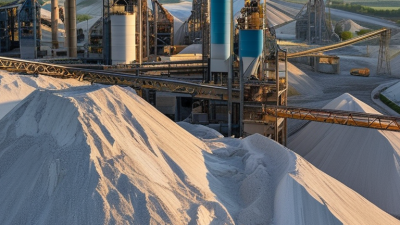
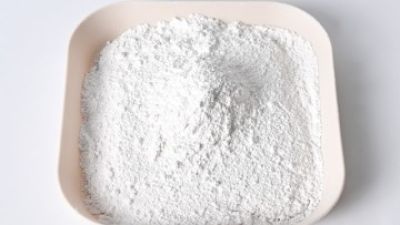
So, wondering why you should pick Carbon Carbonate for sourcing on a global scale? Well, here's the thing: buyers all over are starting to look at carbonate materials through a few key filters—namely, consistency, logistics, and how environmentally friendly they are. When we’re talking about calcium carbonate grades, it’s a pretty versatile ingredient used in plastics, coatings, paper, construction materials, and adhesives. But, and here’s the catch, how it performs heavily depends on factors like particle size, purity, whiteness, moisture content, and surface treatments. Small differences can actually make a big impact—just think about how easily a coating line can spot those variations.
The U.S. Geological Survey’s Mineral Commodity Summaries 2025 points out that limestone and related carbonate materials are absolutely essential in many industries. It also stresses how crucial domestic production, transportation costs, and demand from the construction sector are in shaping sourcing decisions. That’s why relying solely on price isn’t a great idea. A quote might seem cheap at first, but once you throw in freight, port handling, testing, and the risk of rejected batches, it can end up costing way more. Sometimes, what seems like the cheapest option turns out to be the most expensive one in disguise.
Over in Europe, the Best Available Techniques Reference Document for producing cement, lime, and magnesium oxide puts a spotlight on energy efficiency, controlling emissions, and keeping processes in check. These same principles are pretty relevant when you’re evaluating suppliers of Carbon Carbonate. Good partners will provide detailed certificates of analysis, batch traceability info, safety data sheets, and transparent details about their quarry or plant locations. Independent testing is also key—it’s the only real way to verify things like calcium carbonate content, particle size distribution, and heavy metal limits. Basically, it’s proof you can count on, not just marketing fluff.
On the global stage, spreading sourcing across regions makes a lot of sense. Suppliers in Asia, Europe, North America, and the Middle East often have different strengths—whether it’s reserve size, processing tech, port access, or quick turnaround times. But, let’s be real: international buying comes with its own set of uncertainties. Exchange rates fluctuate, freight capacity can be tight, and sometimes different interpretation of specs can cause confusion. That’s why having a disciplined, thorough sourcing process that compares actual cost, technical compatibility, supply security, and responsible practices is so important. Carbon Carbonate can be a really good choice globally, but only if those supplier claims hold up under real-world testing and actual production conditions.

Why Choose Carbon Carbonate for Global Sourcing?
Calcium carbonate begins with a precise identity: CAS 471-34-1. It is not one uniform powder. Industrial buyers compare ground calcium carbonate (GCC), precipitated calcium carbonate (PCC), and coated grades. GCC comes from selected limestone through crushing, grinding, classification, and surface treatment. PCC is chemically produced, offering tighter control over particle size, morphology, and brightness. These differences influence opacity, viscosity, moisture, and dosage. Small specification changes can disrupt a production line.
The U.S. Geological Survey’s Mineral Commodity Summaries 2024 reported approximately 1.5 billion metric tons of crushed stone produced in 2023. Limestone and dolomite supplied roughly 70% of that output. This is not a direct calcium carbonate figure. Still, it shows the depth of the mineral supply base. Form selection remains decisive. Buyers should request assay data, particle-size distribution, whiteness, oil absorption, and moisture results. A low price can hide inconsistent quality.
The International Energy Agency identifies cement production as responsible for about 7% of global carbon dioxide emissions. The phrase Calcium Carbonate Carbon Dioxide captures the core chemistry: CaCO3 releases CO2 during heating. PCC sourcing therefore deserves an energy and emissions review. GCC may reduce processing intensity, but quarry quality and transport distances still matter. Supply plans should also examine bulk density, packaging damage, and storage humidity. Some evaluations remain too theoretical. Trial batches reveal the truth.
Calcium carbonate above 98% purity can improve consistency across international supply chains. It reduces unwanted minerals, color variation, and processing instability. JECFA specifications list calcium carbonate assay at 98.0–100.5% on a dried basis. This range supports dependable use in food, pharmaceutical, polymer, paper, and construction applications.
Purity is not the whole story. Particle size, moisture, whiteness, surface treatment, and heavy-metal limits also affect performance. The USGS Mineral Commodity Summaries reports that the United States produced about 1.5 billion metric tons of crushed stone in 2023. This figure shows the scale of mineral supply, but it does not guarantee high-purity carbonate. A large quarry can still provide inconsistent grades. That is an easy point to miss.
Tips: Request a recent certificate of analysis for every shipment. Check calcium carbonate assay, moisture, particle-size distribution, and trace elements. Compare test methods, not only numbers. Ask for retained samples and batch history before signing a long-term contract.
In practical sourcing work, suppliers above 98% should explain how they control blending, milling, drying, and storage. ISO 3262-5 provides technical guidance for calcium carbonate extenders used in coatings. Buyers should connect this guidance with their own application tests. Laboratory results can look excellent, yet production may expose differences in dispersion or flow. That happens. Therefore, a small trial shipment often provides more reliable evidence than a polished specification sheet.
Why Choose Carbon Carbonate for Global Sourcing?
For global sourcing, particle size often determines processing behavior, surface finish, and final product consistency. Ground calcium carbonate (GCC) commonly spans about 0.7 to 3.0 microns, depending on grinding and classification. Its particles are naturally irregular, with a practical balance between cost and performance. Precipitated calcium carbonate (PCC) offers more controlled morphology and narrower size distributions. This control can improve opacity, brightness, and reinforcement in selected formulations. Still, nominal size alone can mislead. A 1.0-micron grade may perform differently when its distribution, moisture, or surface treatment changes.
In production trials, GCC near 2.0 to 3.0 microns may support efficient loading and stable flow. Finer GCC, around 0.7 to 1.5 microns, can improve smoothness but may increase energy demands. PCC between 0.7 and 1.5 microns often provides stronger optical effects and tailored structure. The best choice depends on resin compatibility, viscosity limits, and required finish. Not every fine particle improves performance. Sometimes, it creates dispersion problems.
Tips: Request a full particle-size distribution, not one average value. Check d50, d97, moisture, whiteness, and bulk density. Compare samples under identical mixing conditions. Record torque, settling, and surface appearance. Ask for recent test data. Supplier claims need verification. A small pilot batch can reveal hidden differences before international purchasing begins.
GCC Versus PCC: Comparing Particle Sizes from 0.7 to 3.0 Microns
This theoretical comparison estimates the external specific surface area of GCC and PCC at equivalent particle sizes. The calculation uses a calcium carbonate density of approximately 2.71 g/cm³ and an ideal spherical-particle model. Smaller particles provide higher theoretical surface area, while actual performance can vary because PCC morphology, GCC particle shape, agglomeration, porosity, and processing conditions are different.
Carbon Carbonate, commonly traded as calcium carbonate, offers a practical advantage in international sourcing. Its decomposition temperature is approximately 825°C, although mineral purity and particle size can shift this value. At this threshold, calcium carbonate breaks down into calcium oxide and carbon dioxide. That change matters in kilns, fillers, coatings, and process control. It is not a simple storage detail.
Before decomposition, the material can usually move through normal ambient logistics without thermal treatment. This reduces the need for heated containers and lowers handling complexity. The USGS Mineral Commodity Summaries 2024 reported global lime production at roughly 430 million metric tons in 2023. That scale reflects strong demand for carbonate-based feedstocks and related processed materials. The International Energy Agency also identifies cement as responsible for about 7% of global energy-related CO2 emissions. Careful temperature control can therefore support more efficient thermal processing, though it cannot solve emissions alone. That point deserves honest attention.
Tips: Confirm the supplier’s thermal analysis, moisture level, particle-size distribution, and bulk density. Ask for batch records. A Carbon Powder shipment may look uniform, yet small moisture differences can affect feeding and silo flow. Do not treat 825°C as an absolute number. Validate it with your own furnace profile and residence time. A pilot test is often cheaper than correcting a full production batch.
Global sourcing of carbon carbonate requires more than comparing prices. ISO 9001 certification can indicate controlled procedures, but buyers should verify its scope, expiry date, and covered production site. A certificate alone can mislead. During supplier reviews, request records for calibration, corrective actions, staff training, and complaint handling. These details reveal whether quality management works beyond paperwork.
REACH compliance also deserves careful checking. Ask for the relevant registration status, substance identity, intended use, and safety documentation. Do not rely on a generic declaration. Carbon carbonate may have different grades, impurities, and applications. If processing involves Carbon Dioxide or other controlled inputs, the supplier should explain handling and documentation clearly. Local regulatory duties may still vary by destination.
Consistent batch quality is often the hardest test. Request recent certificates of analysis from several production lots, not one perfect sample. Compare assay, moisture, particle size, whiteness, bulk density, and trace metals. Retain samples can support later investigations. Traceable lot numbers matter. So does packaging.
Small differences can cause large production problems. A stable supplier should explain process controls and variation limits. An on-site or remote audit adds useful evidence. Still, audits are only snapshots. Seasonal raw-material changes, equipment maintenance, and rushed orders can affect results. I would leave room for doubt and require ongoing batch data before expanding volume.
| Evaluation Dimension | Verified Data or Benchmark | Recommended Supplier Evidence | Global Sourcing Relevance |
|---|---|---|---|
| Chemical identity | Calcium carbonate; CAS No. 471-34-1; EC No. 207-439-9; molecular formula CaCO3; relative molecular mass 100.09 g/mol. | Current technical data sheet, specification sheet, and product identification statement. | Confirms that quotations from different regions refer to the same base substance before comparing price or performance. |
| ISO 9001 quality management | ISO 9001:2015 defines requirements for a quality management system, including controlled processes, documented information, corrective action, and continual improvement. Certification is issued by an independent certification body. | Valid ISO 9001:2015 certificate, certification scope, issuing body, certificate number, and expiry date. | Reduces process uncertainty, but does not by itself guarantee a specific calcium carbonate purity, particle size, or whiteness level. |
| REACH status | Under EU REACH, manufacturers and importers generally need to register substances manufactured or imported at one tonne or more per year, subject to applicable exemptions and conditions. | REACH registration or exemption statement, substance identity, tonnage band where applicable, and EU supply-chain contact details. | Supports lawful import and distribution in the European Economic Area and helps prevent customs or supply interruptions. |
| Batch identification | Each shipment should be linked to a unique lot number, production date, packaging record, and certificate of analysis. | Lot-level CoA, packing list, production date, and traceability record retained according to the supplier’s documented quality procedure. | Enables rapid investigation, targeted recalls, and reliable comparison of incoming material across locations. |
| Calcium carbonate content | Use a product-specific purchase specification. A common procurement benchmark for high-purity industrial grades is ≥98.0% CaCO3; the actual limit must match the intended application. | Test method, individual batch result, specification limit, and laboratory approval or accreditation details. | Higher and more stable carbonate content can improve formulation control and reduce adjustment of downstream recipes. |
| Moisture content | Set a documented application-specific limit. A ≤0.5% moisture target is commonly used as a practical procurement benchmark for dry powder applications, but it is not a universal regulatory limit. | Recent batch test results, test method, sampling procedure, and packaging moisture protection controls. | Helps control caking, conveying behavior, storage stability, and final-product consistency. |
| Particle-size distribution | Particle-size limits should be specified by D10, D50, D90, or sieve residue, depending on the application. No single particle-size range is suitable for every grade. | Laser-diffraction or sieve-analysis report, defined sampling plan, and equipment calibration record. | Stable particle size supports predictable dispersion, opacity, surface finish, viscosity, and processing performance. |
| Whiteness and appearance | Whiteness should be controlled using one agreed measurement method and instrument configuration. Results from different methods are not directly interchangeable. | Color or whiteness test report, instrument method, reference standard, and representative retained sample. | Reduces visible shade variation in plastics, coatings, paper, construction products, and other formulated materials. |
| Batch-to-batch consistency | Recommended qualification approach: review at least three consecutive commercial batches and compare key results against the agreed specification. Use the coefficient of variation (CV = standard deviation ÷ mean × 100%) to monitor variation. | Three or more consecutive CoAs, trend chart, nonconformance history, and corrective-action records where applicable. | A stronger indicator of dependable supply than a single passing sample or a one-time laboratory result. |
| Contaminant control | Set limits for elements and impurities relevant to the end use, such as iron, magnesium, lead, arsenic, mercury, and cadmium. Limits depend on the application and applicable regulations. | Impurity profile, risk assessment, analytical results, and declaration of compliance for the target market. | Improves regulatory readiness and lowers the risk of contamination-related rejection or reformulation. |
| Packaging and logistics stability | Packaging should protect the powder from moisture, contamination, and mechanical damage throughout storage and transport. | Packaging specification, palletization details, loading photographs, storage conditions, and transport damage procedure. | Maintains delivered quality across long-distance shipments and different climatic conditions. |
Note: Product specifications for calcium carbonate vary by grade and end use. The numerical values shown as procurement benchmarks should be confirmed through application trials, regulatory review, and a mutually approved specification before commercial purchase.
Choosing carbon carbonate for global sourcing becomes more practical when filler loading is measured against the whole process, not only resin price. At 10%, the compound usually keeps good flow and surface quality while reducing polymer consumption. Around 20–30%, savings become more visible, but dispersion, moisture, and equipment wear need closer control. At 40%, the purchase price may look attractive. Performance can change quickly.
Cost models should include drying, transport weight, storage space, and rejected parts. A cheaper formulation can lose value if operators need slower molding cycles. Increased filler may also raise brittleness or reduce impact strength. Small test plaques often look acceptable, yet thicker parts may show warping or uneven texture. The trade-off is not perfectly linear.
Supply planning changes with loading levels. A 10% formulation consumes more resin and less filler per shipment. A 40% formulation reverses that balance and may require larger filler reserves. Activated Carbon can also need separate handling because moisture and particle distribution affect consistency. Dual-source planning is useful, but it is not effortless. Different mineral grades may produce different color, flow, or density results. In production reviews, I would verify lot data, sieve results, moisture limits, and trial samples before changing the loading target. A spreadsheet alone can mislead.
Choosing a high-quality food-grade Precipitated Calcium Carbonate (PCC) supplier in China requires more than comparing prices. Buyers should evaluate the factory’s production capacity, quality management procedures, raw material controls, and batch testing standards. A dependable supplier should provide clear product specifications, certificates of analysis, food-grade documentation, and technical support for applications such as calcium enrichment, pH adjustment, anti-caking performance, and improvements in texture and taste. It is also useful to request samples and confirm particle size, whiteness, purity, moisture, and dispersibility before placing a large order.
Packaging and logistics should match the buyer’s storage and production requirements. PCC is available in practical 25kg bags for regular handling and 500kg options for larger-scale operations. Reliable factories should use clean, secure packaging that protects the powder from moisture and contamination during transportation. For international shipments, goods can be arranged from Qingdao port, with delivery terms including EXW, FOB, FCA, CFR, CIF, CPT, and DDP. Buyers should confirm lead times, loading procedures, export documents, inspection options, and after-sales communication in advance to ensure a smooth purchasing process.
A professional Chinese PCC factory should also offer consistent supply, flexible order quantities, and responsive communication throughout product selection and delivery. Suppliers able to explain application methods, recommend suitable grades, and maintain stable quality across batches are better positioned to support food manufacturers’ long-term needs.
: Purity above 98% can reduce mineral variation, color changes, and processing instability. It supports steadier production across different shipments. Purity alone is insufficient.
Check moisture, particle-size distribution, whiteness, surface treatment, and trace elements. Heavy-metal limits may also matter. Compare testing methods carefully.
Request a recent certificate of analysis for every shipment. Ask for batch history, retained samples, and test-method details. Records matter.
No. Large production volume does not guarantee consistent purity or particle size. Blending, milling, drying, and storage practices affect each batch.
A small trial can reveal dispersion, flow, color, and moisture problems. Laboratory data may look excellent. Production can still expose differences.
At 10%, resin use falls while flow and surface quality often remain stable. Around 20–30%, savings become clearer. Processing controls become more important.
Higher loading may increase brittleness, warping, uneven texture, and equipment wear. Slower molding cycles can reduce the expected savings. The trade-off is not linear.
A 10% formulation needs more resin and less filler. A 40% formulation needs larger filler reserves and more storage space. Transport weight also changes.
No. Different mineral grades can change color, density, flow, or dispersion. Compare lot data, sieve results, moisture limits, and trial samples before switching. A spreadsheet can mislead.
Carbon Carbonate, commonly identified as calcium carbonate (CAS 471-34-1), is an essential mineral material available in industrial forms such as Ground Calcium Carbonate (GCC) and Precipitated Calcium Carbonate (PCC). For global sourcing, purity levels above 98% can support stable product performance, while particle sizes ranging from approximately 0.7 to 3.0 microns allow manufacturers to select materials suited to coatings, plastics, paper, and other applications. Understanding the differences between GCC and PCC is important for balancing consistency, processing needs, and final product quality.
Its decomposition temperature of about 825°C is also significant for processing, storage, and transportation planning. Reliable suppliers should demonstrate quality management practices such as ISO 9001 certification, REACH compliance, and consistent batch control. In addition, filler loading levels of 10–40% can influence material costs, mechanical properties, appearance, and production efficiency. By evaluating purity, particle size, compliance, thermal behavior, and supply capacity together, buyers can build a more predictable and cost-effective global sourcing strategy.