
Technology Upgrading and Diversified Innovative Applications of Calcium Carbonate Powder Deep Processing
Calcium carbonate (CaCO₃), as a crucial inorganic non-metallic material, is widely utilized in traditional industrial sectors such as plastics, papermaking, coatings, rubber, and building materials due to its notable advantages, including abundant sources, low cost, non-toxicity, and stable chemical properties. However, conventional calcium carbonate powder suffers from poor dispersion performance, weak compatibility with organic polymer matrices, and relatively limited functionality, which restricts its application in high-value-added industries. Through advanced processing techniques such as surface modification, particle size and morphology control, and functionalized composites, the comprehensive performance and product value of calcium carbonate powder are significantly enhanced, effectively expanding its innovative application boundaries.
The Main Preparation Processes of Nano Calcium Carbonate
The preparation of nano calcium carbonate is mainly divided into two categories: physical methods and chemical methods. Heavy nano calcium carbonate is generally processed by mechanical crushing method; Light or precipitated nano calcium carbonate is synthesized by chemical method, mainly including precipitation method, carbonization method, lotion method, sol gel method, etc., which can realize the directional control of product crystal form.
Carbonization method is currently the mainstream technology for producing nano calcium carbonate in industry. This process uses limestone with high calcium carbonate content as raw material, and sequentially goes through calcination, digestion, carbonization, modification, dispersion, drying, packaging and other processes to obtain the final product. The carbonization reaction is the core link of the whole process. According to the different contact forms of Ca (OH) ₂ slurry and CO ₂, the carbonization process can be divided into intermittent carbonization, multi-stage spray carbonization and high gravity carbonization.
Regardless of which carbonization process is used, the key to technology lies in precise control of process conditions. During the carbonization process, multiple conditions such as the initial concentration of calcium hydroxide, initial carbonization temperature, CO ₂ partial pressure, and total gas flow rate jointly affect the morphology and particle size of calcium carbonate. These parameters directly intervene in the nucleation and crystal growth process of calcium carbonate crystals by changing the solution supersaturation and gas-liquid mass transfer characteristics, in order to obtain the target particle size and morphology of the powder.
Grinding and Processing Technology of Heavy Calcium Carbonate
The production process of heavy calcium carbonate includes beneficiation, ore crushing, ordinary grinding, ultrafine grinding, and surface modification. There are four main preparation technologies in the current industry: Raymond mill process, ring roller mill process, ball mill process, and ultrafine vertical mill process, each with different technical characteristics.
Raymond Grinding Process
Mainly used for producing powder products with 325 mesh and below. By relying on the high-speed rotation of the suspended rollers on the central axis, the material is crushed through squeezing, friction, shearing, and intermittent impact. This process equipment has low investment, low energy consumption level, and good economy; However, due to the limitation of the crushing mechanism, the proportion of micro powder production is not high, and the overall production capacity is relatively small.
Ring Roller Grinding Process
The material is fed into the gap between the grinding wheel and the grinding ring, and powder processing is achieved through impact, extrusion, and grinding. Compared to Raymond mill, its grinding roller structure has been optimized, resulting in higher grinding efficiency and good particle size performance of the finished product. Due to its significant energy-saving effect and low equipment investment, it has rapidly become popular in the heavy calcium industry; The disadvantage is that the production capacity is relatively low, which will be limited in large-scale industrial production scenarios.
Ball Milling Process
By relying on the rotation of the cylinder to drive the grinding medium, continuous impact and grinding between materials and media can be carried out to prepare heavy calcium products in the range of 600-6500 mesh, with high fine powder production and large single machine production capacity. However, the production process is prone to excessive grinding, which can result in high energy consumption.
Ultra Fine Vertical Grinding Process
The crushing mechanism is also compaction crushing. The raw materials enter the grinding disc through the feeding device and move towards the edge of the grinding disc under the action of centrifugal force, entering the grinding area between the grinding roller and the grinding disc liner. Three grinding rollers are equipped with hydraulic pressure devices, which continuously output constant grinding pressure and apply greater grinding pressure to the material. The crushing efficiency is much higher than that of Raymond mills, making it suitable for preparing high-quality ultrafine heavy calcium.
Functionalized Surface Modification Technology of Calcium Carbonate
Surface modification is a crucial technology for deep processing of calcium carbonate. In the past decade, there has been a strong demand for modified calcium carbonate products in the market, with an annual growth rate of 10-15%. The surface modification of calcium carbonate mainly involves organic coating modification and composite modification. Organic coating modification selects stearic acid and its salts, aluminate coupling agents, titanate coupling agents, water-soluble polymers, etc. as modifiers to form a coating layer on the surface of calcium carbonate particles, improving the surface properties of the powder.
Dry modification is currently the mainstream process in industrial production. The powder is kept in a dry state and enters the modification equipment to complete dispersion. Simultaneously, the prepared modifier is added to complete the surface modification treatment of the powder under suitable temperature conditions, and the process is adapted for continuous batch production.
Diversified Applications of High-Performance Calcium Carbonate Powder
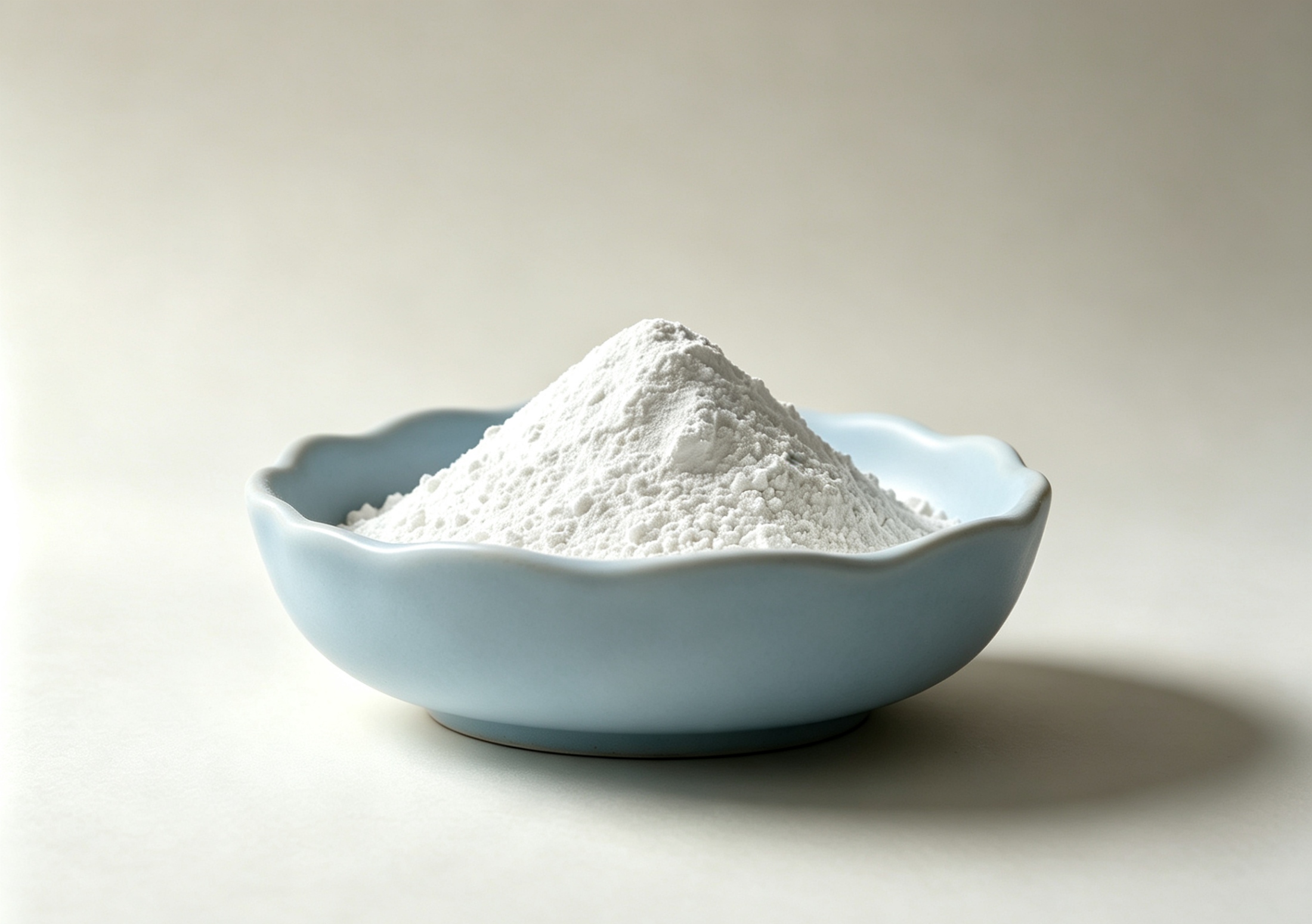
Among heavy calcium carbonate, ultrafine heavy calcium, modified heavy calcium, high-purity heavy calcium, and composite calcium carbonate are all high value-added products with great development potential; In terms of lightweight calcium carbonate, modified nano calcium carbonate, spherical calcium carbonate, porous calcium carbonate, calcium carbonate whiskers, and composite calcium carbonate also have high development value. In traditional industries such as plastics, papermaking, coatings, rubber, adhesives, pharmaceuticals, food, and feed, a large number of calcium carbonate based high value-added products have emerged.
In addition, calcium carbonate has many advantages such as safety and environmental protection, low cost, high purity, stable chemical properties, and strong universality. It is gradually penetrating into emerging industries and continuously achieving innovative applications in cutting-edge directions such as new energy materials, electronic information materials, environmental functional materials, and magnetic responsive materials, demonstrating good development prospects.