
The Application of Calcium Carbonate in the PVC Foaming Industry
Selection of Calcium Carbonate Properties
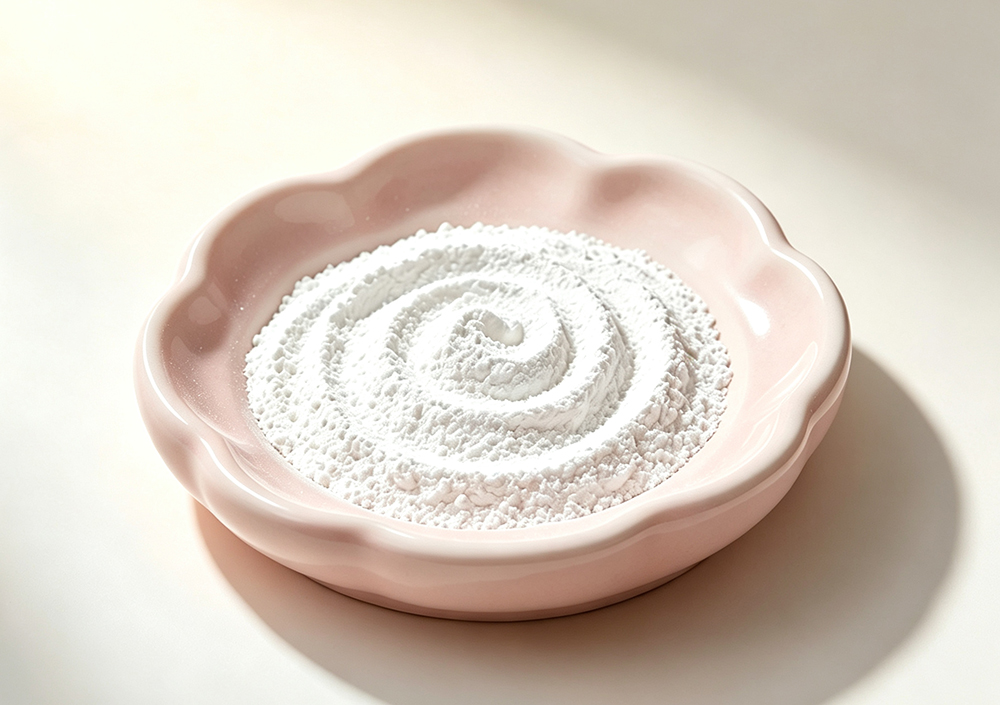
Calcium carbonate can positively promote foaming for two reasons: first, it can act as a nucleating agent, adsorbing foaming gases to form bubble nuclei, thereby controlling the number of pores and refining the PVC cell structure; second, it can improve the melt properties of PVC. The relatively rigid nature of calcium carbonate can reduce the deformation and mobility of the melt, thereby inhibiting excessive pore expansion and refining the pore size. However, not all calcium carbonate can promote PVC foaming—it must meet the following appropriate conditions to achieve this effect.
Addition Amount of Calcium Carbonate
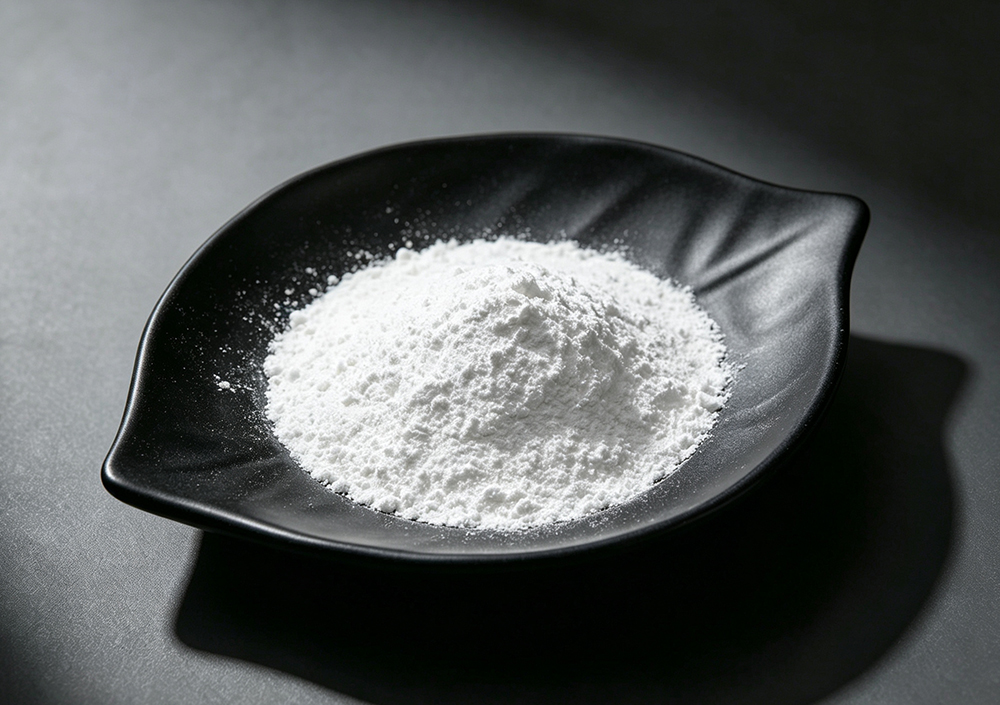
The appropriate amount of calcium carbonate added can promote the quality of foaming. The amount of calcium carbonate added is too low, which prevents the formation of sufficient nucleation points in the melt, resulting in a low foaming ratio; If the amount of calcium carbonate added is too high, it can form many nucleation points, but if the filling is too large and the melt is too low, it can cause too much foaming and also reduce the foaming ratio.
Dispersibility of Calcium Carbonate
If the inorganic powder is evenly dispersed in the resin, it can ensure that there is no agglomeration phenomenon and it does not affect the foaming molding. The method to ensure the dispersibility of calcium carbonate is surface treatment of calcium carbonate. If the surface treatment of inorganic powder is thorough and completely changes the original hydrophilicity to oleophilicity, it will not affect the foaming molding. The specific surface treatment method can adopt the dual treatment method of using aluminum ester coupling agent/polyol surfactant, or choose aluminum titanium ester coupling agent treatment. One way to ensure the dispersibility of calcium carbonate is to have an appropriate size, and the other is to coat it with a surface coupling agent. If the surface coating treatment of calcium carbonate is not thorough, it will cause uneven dispersion, resulting in the aggregation of fine powder into larger particles. Due to the much higher thermal conductivity of calcium carbonate than resin, it begins to absorb heat in the melt, forming local hotspots and reducing the strength of the melt near the hotspots. The foaming agent decomposes too early, causing the product to foam before reaching the cooling area, resulting in the surface of the product not being peeled or having poor peeling.
Selection of Calcium Carbonate Varieties
The characteristic requirements for calcium carbonate have been selected, and among the various types of calcium carbonate mentioned above, PVC tends to choose lightweight calcium carbonate. Assist in stabilization: The pH value of light calcium carbonate is high at 9-10, while the pH value of heavy calcium carbonate is 8-9, so the alkalinity of light calcium carbonate is stronger, and the auxiliary heat stabilizer plays a role in thermal stabilization.
Particle size advantage: Light calcium carbonate has a relatively fine particle size, which is exactly what PVC needs and can meet the performance requirements of PVC pipes and profiles.
Eliminating color light: PVC products generally contain yellow color light, while lightweight calcium carbonate contains blue color light, and adding it can effectively eliminate yellow color light.
Improving toughness: Lightweight calcium carbonate is beneficial for the impact strength modification of PVC products, while heavy calcium carbonate contributes significantly to tensile strength.
However, currently because the particle size of heavy calcium carbonate can reach the nanometer level, both heavy calcium carbonate and light calcium carbonate can be selected for PVC. Considering that the two types of calcium carbonate have different measurement focuses on modification contributions, it is often best to choose a combination of the two. Generally, a ratio of 3/1 of heavy calcium carbonate/light calcium carbonate is chosen, which can balance the tensile strength and impact strength of PVC.
For heavy calcium carbonate and light calcium carbonate, there are slight differences in formula design. For PVC formulations using lightweight calcium carbonate: Lightweight calcium carbonate can promote the thermal stability of PVC, so the formulation can correspondingly reduce the stabilizer content; Lightweight calcium carbonate is beneficial for impact strength and can correspondingly reduce the amount of toughening agent used; The oil absorption value of light calcium carbonate is relatively high, and it is necessary to increase the amount of small molecule additives such as coupling agents, lubricants, and dispersants accordingly. For the formula of choosing heavy calcium carbonate, the opposite is true.