
Five High-End Industrial Trends of Calcium Carbonate
When we mention calcium carbonate, most people tend to focus on the application of traditional low-cost fillers such as plastics, papermaking, and coatings. It is the "panacea" filler for traditional industries. The domestic calcium carbonate industry is deeply trapped in the dilemma of low-end overcapacity, homogenization and competition at low prices. The selling price of ordinary heavy calcium is less than 100 yuan per ton, and the profit is meager. With the development of the times, emerging industries such as new energy, biodegradable materials, and biomedicine are rapidly rising, and calcium carbonate is gradually breaking through traditional fields and developing towards high-end manufacturing and cutting-edge materials.
As calcium carbonate transforms into a functional core material and moves towards a new application track, these 5 emerging golden tracks open up new growth space for calcium carbonate.
New Energy Lithium Batteries, Power Battery Safety Materials

The explosion of new energy and energy storage industries has propelled calcium carbonate to become a safety functional material for power batteries, making it the most promising track for growth. Its core applications include: coating on membranes, which can raise the heat-resistant temperature from 120 ℃ to over 180 ℃, prevent thermal runaway, and optimize electrolyte infiltration; Coating positive electrode material to extend cycle life; Doping solid electrolytes to suppress lithium dendrites; After modification, it can be used for battery pack shells, achieving a weight reduction of 8% -12% and a rigidity increase of 30%. GGII predicts that the demand for calcium carbonate for lithium battery separators will reach 25000 tons by 2026, with an annual growth rate of over 30%. The added value of electronic grade products in this field is 8-15 times that of ordinary heavy calcium, and top companies have locked in long-term orders with strong incremental certainty.
Biodegradable Plastic

The global plastic ban and tightened domestic regulations on single-use plastics have spurred rapid growth in PBAT and PLA biodegradable plastic production. Calcium carbonate has emerged as a key low-cost filler, with 30–50% active content significantly cutting material costs, adjusting degradation rates, and improving product toughness—addressing issues like brittleness and poor formability in pure biodegradable plastics. Widely used in food containers, express packaging, and agricultural films, degradation-specific calcium carbonate requires hydrophobic surface modification to prevent clumping, giving it a notable price premium. As disposable non-degradable plastics are phased out across China, the calcium carbonate market for biodegradable plastics continues to grow at over 20% annually
Semiconductors and Electronic Information

Electronic-grade ultrafine calcium carbonate (low impurities, high insulation, stable particle size) is emerging as a cost-effective filler in semiconductor packaging, MLCCs, and flexible circuit boards. As a submicron high-purity filler, it improves insulation and thermal conductivity in chip packaging at much lower cost than electronic silica; it optimizes capacitance stability in MLCC ceramic powders for 5G and consumer electronics; and it enhances flex resistance in FPC substrates for foldable screens and wearables. Previously reliant on imports, domestic leaders like Guangyuan Chemical have now achieved mass production, leaving substantial room for import substitution.
Dual carbon environmental protection track, carbon neutral core materials
Against the backdrop of China's "dual carbon" strategy and industrial green transition, calcium-based carbon sequestration—offering low cost, high efficiency, and scalability—has become a core path for CO₂ resource utilization, opening a new green business model for the calcium carbonate industry.
Limestone, abundant and low-cost, readily mineralizes CO₂ from industrial emissions into high-quality calcium carbonate products, turning waste into value. Compared with traditional CCS, this process features milder conditions, simpler flows, and lower industrialization barriers, making it suitable for high-emission sectors like power, building materials, and chemicals. It helps enterprises cut emissions and meet carbon targets, while converting stored CO₂ into high-purity calcium carbonate powders and functional materials, extending the green value chain.
This technology reshapes the traditional calcium carbonate industry—from basic raw material supplier to core material provider and carbon-reduction service player in the carbon-neutral economy. By establishing a closed-loop model of "carbon capture–mineralization–product application," the industry achieves both social and economic benefits, creating a new business model that balances ecology and profit. It has emerged as a key track supporting green industrial development and regional carbon neutrality goals.
Biomedical and Health Consumption

Aging populations and rising health-conscious consumption are driving demand for high-purity calcium carbonate in pharmaceuticals, medical aesthetics, and food. In biomedicine, its use now extends beyond traditional calcium supplements and antacids—porous calcium carbonate microspheres are emerging as a key research focus for novel drug carriers, while medicinal-grade material serves as supplement ingredients, tablet fillers, and bone repair scaffolds due to its biocompatibility and absorbability. Nano high-purity calcium carbonate is used as a matte filler in cosmetics and a mild abrasive in toothpaste, partially replacing titanium dioxide. Food-grade active calcium carbonate is applied in animal and aquatic feed for calcium fortification, with strict heavy metal and microbial controls, offering high entry barriers and stable margins.
In premium daily chemicals and skincare, calcium carbonate has evolved from low-end uses to refined applications. In toothpaste, it now spans multiple subcategories—cleaning, whitening, and enamel-protective—with particle size and crystal morphology precisely tuned to balance cleaning power and safety. In skincare and cleansers, specially modified spherical calcium carbonate micro-powder serves as a gentle physical exfoliant that absorbs excess oil and impurities without damaging the skin barrier. Its natural, safe, and mild profile aligns well with consumer trends toward natural skincare and gentle cleansing, further elevating its value in the high-end daily chemical sector.
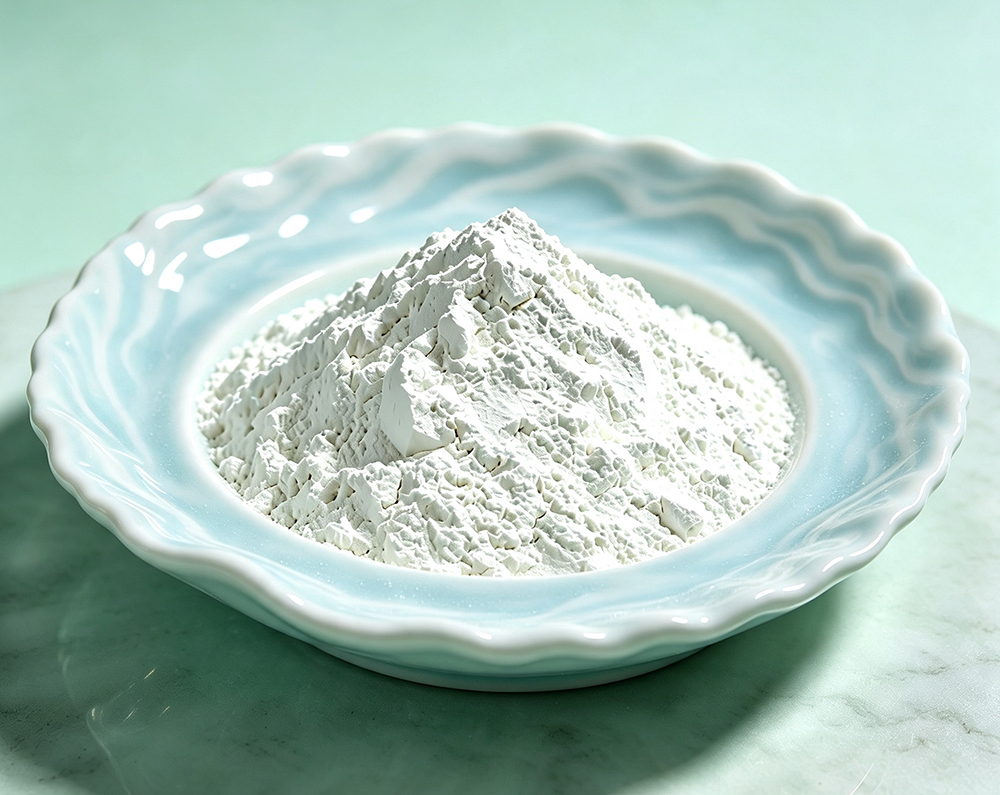
Calcium carbonate is transcending its traditional filler role, driven by synergies between basic materials and emerging industries. Emerging sectors bring incremental demand, while calcium carbonate’s cost-effectiveness and tunable performance enable scalable production of new materials. Low-end overcapacity is only superficial—high-end functional grades remain in short supply. As calcium carbonate finds use in power battery safety components, biodegradable plastic additives, and carbon sequestration carriers, the industry's growth ceiling is set to rise significantly.