Leave Your Message
China’s limestone trade really plays a big role in everything from construction and landscaping to making cement and architectural projects. But when it’s time to pick a supplier, it’s definitely not just about comparing prices or glancing at shiny sample pics. You’ve gotta dig a little deeper—check out the stone’s consistency, how accessible the quarry is, their processing capacity, packaging quality, and how experienced they are with exporting. Those small differences can actually matter a lot. For instance, a pale slab might look different under warehouse lights—showing some gray veins—and what arrives might vary in tone across the batch.
This handy guide compares some of the top Chinese limestone suppliers by asking real questions: What grades do they handle? Can they send recent batch photos, samples, and clear technical data? How tight are their cutting tolerances, and how do they protect shipments? There's a good rule of thumb from sedimentary petrologist Dr. Robert L. Folk—he once said, 'Judge limestone by its composition, texture, and use; don’t rely on appearance alone.' Of course, this is a paraphrase, but the point is: don’t just go by looks—pay attention to measurable details too.
And just visiting a supplier’s showroom doesn’t tell the whole story. Be sure to ask if their samples really match the actual production batches, and understand their inspection processes before placing an order. Yeah, this can feel a bit tedious — no kidding. But it’s worth it. No single ranking can cover every quarry, product, or shipment, and supplier capabilities can change over time. So, this guide focuses on proven, measurable qualities rather than grand claims. Use it as a starting point—then double-check the current specs, lead times, and paperwork directly with each supplier to be totally sure.
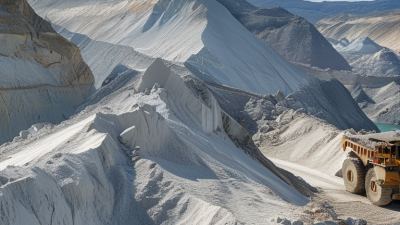
Limestone is a sedimentary rock made mainly of calcium carbonate, but its composition varies from deposit to deposit. Geologists commonly distinguish calcitic limestone, rich in calcite, from dolomitic limestone, which contains more dolomite. Clay, silica, and iron compounds can also affect color, strength, and workability. A pale quarry face may yield stone with subtle gray bands or rusty flecks.
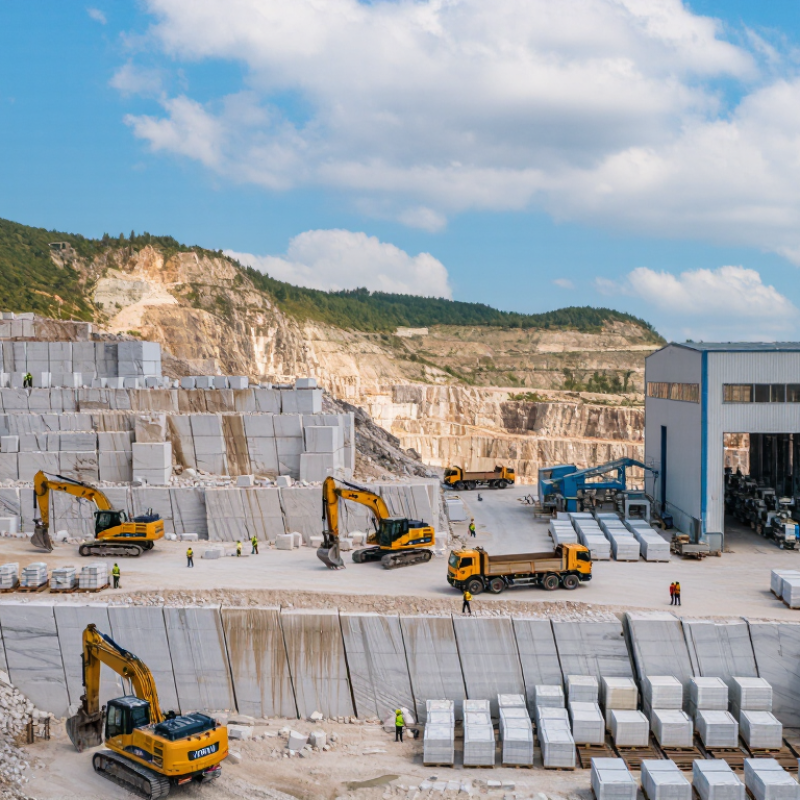
Limestone Building Materials are classified by both form and intended use. Dimension stone is cut into blocks, slabs, tiles, or cladding panels for walls and floors. Crushed limestone becomes aggregate for concrete bases, paving, and drainage layers. Finely ground material may serve as a mineral filler, though its suitability depends on particle size and chemical purity. Looks can mislead. A polished sample tells little about a large shipment’s consistency.
For buyers comparing suppliers in China, request the quarry origin, product dimensions, absorption rate, compressive strength, and recent test data. Check several pieces, not just the showroom sample; veining and porosity can change across a batch. For exterior projects, ask how the stone performs after repeated wetting and drying. Test the batch. I would not treat one attractive slab as proof of reliable supply. Even good records need to match the material actually delivered.
This overview compares common supplier categories and limestone material types available in China. It is a product-and-capability guide, not a company ranking; no company or brand names are included.
| Supplier Category | Limestone Material or Product | How It Is Classified | Common Supply Forms | Typical Uses | Key Purchasing Checks |
|---|---|---|---|---|---|
| Quarry operators | Natural limestone blocks and rough stone | Classified by geological characteristics, color, texture, soundness, and suitability for cutting or crushing. | Quarry blocks, irregular pieces, and rough-cut blocks | Further processing into building stone, slabs, tiles, or aggregate | Confirm block dimensions, visible defects, consistency between lots, extraction permissions, and transport arrangements. |
| Dimension-stone processors | Architectural and construction limestone | Classified by finish, dimensions, thickness, color range, and intended indoor or outdoor use. | Cut-to-size panels, slabs, tiles, steps, and other fabricated pieces | Wall cladding, flooring, paving, landscaping, and architectural details | Request samples and tolerances; check finish, dimensional accuracy, water absorption, and suitability for the intended exposure. |
| Crushed-stone and aggregate producers | Crushed limestone aggregate | Classified mainly by particle-size grading and relevant physical or mechanical properties. | Graded crushed stone, screenings, and fine aggregate | Concrete and asphalt production, road bases, drainage, and general construction | Specify the required grading and applicable project standard; verify test results, cleanliness, and delivery consistency. |
| Ground calcium carbonate producers | Ground limestone, commonly sold as calcium carbonate powder | Classified by particle size or fineness, brightness, purity, surface treatment, and application requirements. | Fine or coarse powder, supplied in bags or bulk | Fillers and extenders for applications such as plastics, paper, paint, rubber, and construction materials | Check particle-size distribution, moisture, brightness, chemical composition, surface treatment, and packaging. |
| Industrial mineral suppliers | High-calcium or dolomitic limestone | Classified by chemical composition. High-calcium limestone is predominantly calcite; dolomitic limestone contains a significant proportion of the mineral dolomite. | Lumps, graded stone, and, where processed, powder | Metallurgical flux, industrial processing, agriculture, and as feedstock for lime manufacture | Set limits for calcium, magnesium, silica, moisture, and particle size according to the application; obtain a current chemical analysis. |
| Industrial lime producers | Quicklime and hydrated lime made from limestone | These are processed lime products rather than raw limestone. Quicklime is produced by calcining limestone; hydrated lime is produced by adding water to quicklime. | Lumps, granules, or powder; bulk or bagged | Water treatment, construction, environmental treatment, and industrial processes | Confirm available lime grade, reactivity, particle size, moisture protection, packaging, and the test methods used for product specifications. |
Classification note: Limestone is a sedimentary rock composed mainly of calcium carbonate minerals, commonly calcite. Its composition and physical properties vary by deposit. Product names and commercial grades do not replace a buyer-agreed specification or laboratory test report.
Compare quarry access, processing capability, product range, and recent test records. Capacity alone does not ensure consistent color or strength.
Suppliers may offer rough blocks, slabs, tiles, cladding, crushed stone, and fine powder. Check dimensions and grade details before ordering.
Construction, interiors, road building, and landscaping are common markets. Slabs suit floors and wall panels; crushed stone can support road bases and drainage.
Request recent results for density, water absorption, compressive strength, and dimensional tolerance. Keep the records with the order documents.
Ask for a representative sample, quarry location, and batch photos. Compare the sample and delivered stone under natural light. Veins may differ.
No. Natural color and strength can vary, even when production is large. I would not assume every piece will match.
Ask the supplier to define each grade in writing before ordering. Terms can vary between facilities.
Some facilities offer cutting, packing, and export documentation, but services differ. Confirm the details for your order. Check twice.
Limestone Materials include a range of natural stone products, from blocks and slabs to tiles, aggregates, and processed limestone. They can be classified by appearance, grade, dimensions, and intended use. China’s supply industry brings together quarry operators, processors, wholesalers, and exporters, with suppliers differing in production scale, specialization, and access to transport. Identifying leading suppliers therefore involves looking beyond product variety to factors such as material consistency, processing capability, quality controls, production capacity, and reliable delivery.
Notable suppliers serve construction, architecture, landscaping, and industrial applications, offering products suited to projects with different technical and aesthetic requirements. When comparing potential partners, buyers can assess sample quality, specifications, available volumes, customization options, packaging, lead times, and logistics support. A clear understanding of these factors helps match a supplier’s strengths to project needs and supports informed decisions about dependable sourcing.